
The Edge: What To Do if You Lose Your Job or Have To Take a Pay Cut
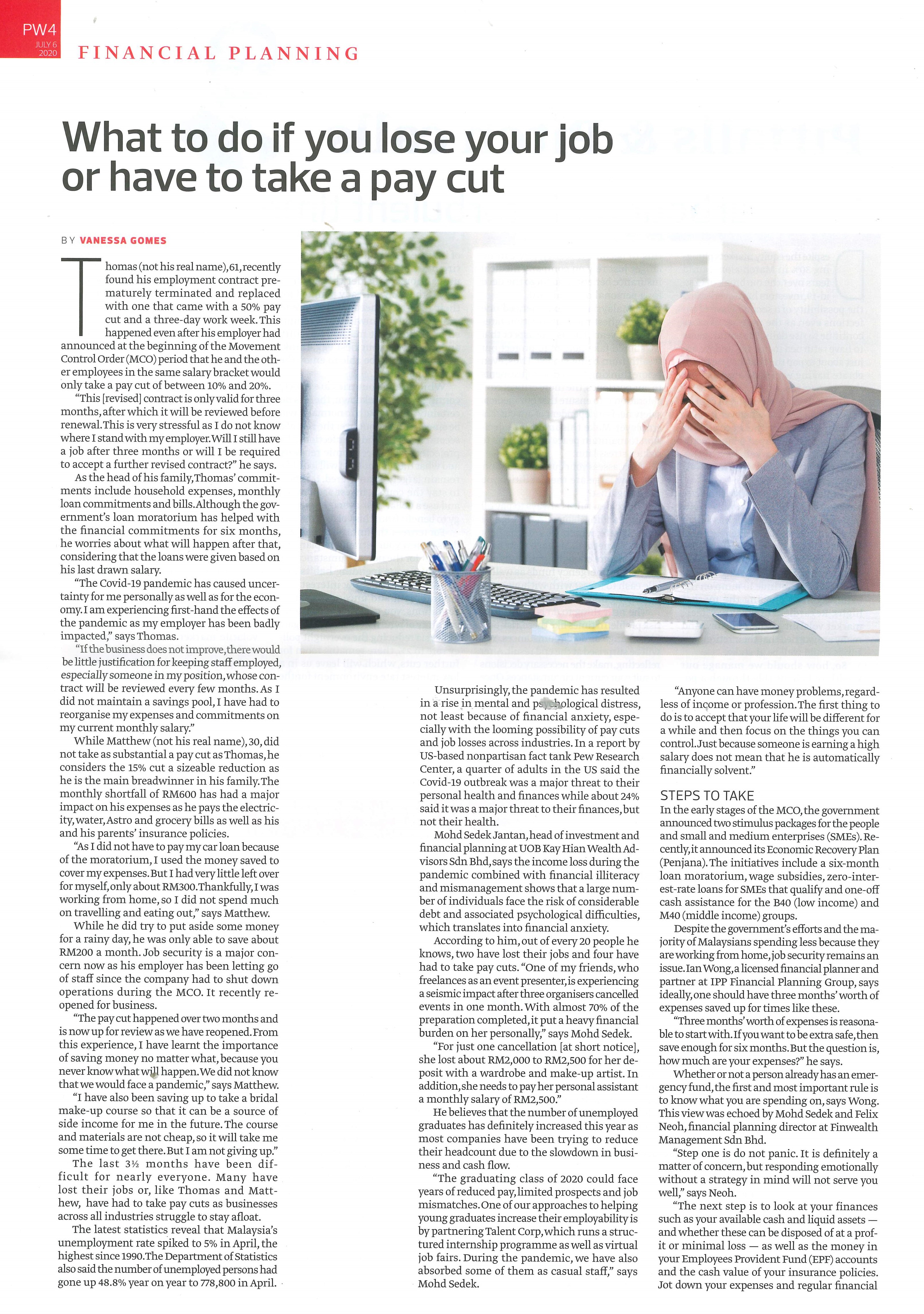
This article explores how the Movement Control Order (MCO) in Malaysia impacts the people’s financial situations and what they can do about it. Ian recommends having an emergency fund with three to six months’ worth of expenses saved up for times like these, but in order to do so you first need to identify how much your expenses are per month. Take into consideration your assets including your savings and any fixed deposits or stocks you may have to see if you can make your money last longer in trying times.
Regarding the EPF monthly withdrawal through i-Lestari, Ian comments that the maximum withdrawal of RM500 may not be sufficient although it would definitely help to put food on the table. He has also pinpointed an unhealthy cultural norm amongst Malaysians to take on personal loans for big-ticket items such as wedding planning, travel and honeymoons as it damages their finances and puts them in debt. These should only be used for emergencies where the alternative is having no place to stay and no food to eat, and even then, try not to take more than what is needed.
For those who have an investment-linked policy and access to the money without incurring any penalties, Ian says this can be considered during an emergency. However, it is crucial to be aware of your actions and to put the money back in at some point or it could result in losing your insurance coverage in the future. He further advises that those who have extra cash to spare and will not need it for the next three to five years can consider looking into the equity market, specifically the Malaysian or US markets as a lot of good stocks are currently trading at a discount. His general advice to investors is to be smart about investing in the stock market and to think ahead.
This article can be found here.